
Your brand marketing needs your best analytical talent


We now expect analytics in all of our marketing (thank you, Internet)

When people think of analytics in marketing, they think of online marketing. They think of things like PPC and SEO, measuring clicks, tracking pixels, conversion funnels and so on. They think of direct acquisition campaigns and CRM activities.

And it’s sensible to equate marketing analytics with online marketing. Online marketing has changed the culture of marketing in general by providing unprecedented levels of data and automation. It has changed expectations. Marketing should be measured and optimized. Its spend should be justified with numbers.

However, analytics in brand marketing is hard

Where this cultural revolution runs into problems is with brand marketing. Brand marketing is traditionally based around non-online media (such as TV and print). This makes it much harder to granularly track its impact. How many of your target customers were affected by that ad that ran on the bottom half of page 5 of the newspaper? And a lot of brand marketing is not directly linked to an immediate purchase by the customer, so it’s harder to know confidently whether it has yielded a return.

It is a strange juxtaposition at a company when the marketer managing Facebook ads can measure down to the penny the return from 1k of spend, while the brand manager might struggle to prove any impact from 1 million of spend. This contrast isn’t helped by the tendency for the most analytical minds to steer away from brand marketing and towards online. But the exact opposite should happen.

Hard problems need good people

Brand marketing deserves some of the most analytical talent that a marketing organization can throw at it. Why?

First of all, the budgets for brand marketing tend to be big and chunky. And they can be spent fast. Media buys and creative production can chew through a seven figure budget in the blink of an eye. Compared to online acquisition or CRM campaigns, where spend can be drip fed and paced, brand marketing is high risk.

Secondly, the analytics for brand marketing are just much harder. Analyzing online marketing is a straightforward: lots of data, lots of tools, narrowly-defined problems. In brand marketing, your data is much sparser. It comes from many sources. Those sources aren’t automated. In fact, one of the key sources is probably a survey, which needs time and money to be run. And to reach a conclusion, you need sharp minds to triangulate rigorously across your data sets.

Brand marketing might be evolving, but some things stay the same

“But wait! People are consuming Youtube and banner ads. Not terrestrial TV and print. We can measure our heart out and automatically suck up data, just like a Google PPC ad.”

Sure, but it’s only partially true. The old mediums, like print, aren’t going to suddenly die. And until we can perfectly track people seeing a billboard, listening to a radio ad and reading a PR piece – and then link them to their purchase 1 year later – the need for sophisticated analytical talent won’t go away.

So for at least the years to come, it won’t be easy. And this is exactly why brand marketing needs the best analytical talent your organization can give to it.


GS Dun builds new ventures and products, such as CakeAB, the easy-to-use pocket calculator for AB tests. Our name is short for “get sh** done”, so while we can talk the talk, we prefer to keep our meetings short and just get on with it.
Picking a name for your business

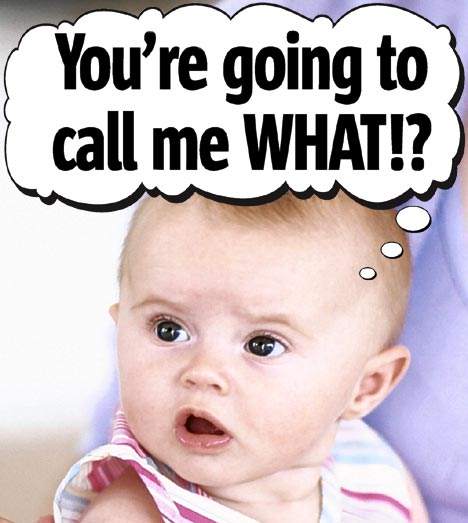
I’ve gotten into discussions with two different entrepreneurs about the names of their businesses. I’ve spent a ridiculous amount of time on this in the past, so hopefully this post can save others time in the future.

Pick a name that makes you, the founder(s), feel good.

We’ll go through some more considerations on picking a name below. But ultimately it is a subjective decision. It will become part of your identity. Pick something that you will be proud of. Undecided? Sleep on it. Literally take a few nights and eventually one of your options will stick to you.

You don’t need to rely on the name alone to carry the brand.

The name never shows up in isolation. It shows up next to marketing creative. It is defined by the customer’s product experience. It’s part of a PR story. The name is only one piece of what defines your brand. In fact, there are many instances where the name is misleading (“Pizza Express” and “Carphone Warehouse” are two great UK examples). So don’t force the name to convey the greatness of what you’re doing. It’s like having a child and naming her “Super Awesome Kid”, because if you just name her “Sarah”, she might not be awesome.

What kind of name do you want?

I think of names coming in four different categories. As an exercise to get your creative juices flowing, you may find it helpful to think up of a name in each category.

  1. Neutral name. A quick scan of my LinkedIn feed yields some: GroupM, Pentagon, Avollio. I have no idea what these companies do, nor do I get an emotional feeling from them. This isn’t bad. They’re blank slates that you can turn into what you want.
  2. Name with connotation. Example: Accenture. It’s a made up name that doesn’t obviously point to what they do. But it has some sort of connotation.
  3. Name with service. Examples: Betfair, Covestor, Insight Venture Partners. These are names that obviously point to the service they provide.
  4. Name of person. Examples: Dell, McKinsey. You put a name on it, so it’s personal. I associate this approach with professional services firms, but it doesn’t have to be.

Again, there’s no right or wrong approach. Some might say that for a new business, #3 is the best approach. Or that you should go with something that is catchy. I’d say again, in the grand scheme of things, the meaning of your brand will come from the service you provide, so go with what speaks to you.

A checklist to avoid pitfalls

Here are some checkpoints that might tell you your name is problematic.

  1. Pronunciation check: write the name down on a slip of paper and ask several friends to say it back to you. If they have can’t immediately say it out loud, then scrap the name. Difficulty saying it = difficulty remembering it.
  2. International bad work check: dream of the countries that you might enter in the next 5 years. Do the pronunciation check with your friends from those places. And ask them about connotations. If you want to be extra anal, pay attention to regional differences (for example, English and Spanish differ on each continent) – just in case the name turns out to be slang for “anal”.
  3. Google check: run it through Google. Is your chosen name coincidentally the name of Mexico’s biggest drug cartel? Probably best to avoid.
  4. Domain name check: check if the URL you want is taken. There are a lot of URLs being squatted upon. If you love your name enough, you can go ahead and try to make an offer. Your domain name provider will probably provide a service for making anonymous offers.

Avoid name consultants.

I’ve been in situations where satisfying stakeholders meant engaging high-priced brand consultants to come up with names. Don’t do it. Take whatever budget you might spend on the consultants and use it to take the founding team out for a good meal and drinks. You’ll come up with five better options for a fraction of the cost.

Should I localize my name?

Lastly, if you’re thinking of a new name because you’re launching your business in a new territory, I would resist the urge to change the name. The reason is that if you’re building out a truly global business, your marketing money (especially brand spend) will go further with a single name: above-the-line spend, SEO, PR, and other creative assets. Think about global brands. They don’t “translate” their name locally, because again, the meaning comes from the company’s service and marketing, not just the name. Even if you have a pronunciation problem, it is easier to allow for local pronunciation rather than to change the name entirely (e.g. Hyundai is a good example).

———————————–

Ultimately, you should pick something that you feel proud to call yourself. Chances are, you’ll literally end up wearing it.